Home / Cat breeds / Turkish Van
Turkish Van breed guide
Cat Fanciers' Association (CFA) compares the robust, muscular Turkish Van with the elegant, refined Turkish Angora as an Olympic swimming champion against a ballerina.
The Van developed around Lake Van in a geographically distant part of Turkey. CFA calls it one of the most dog-like of all cat breeds.
- Coat length
- Longhair
- CFA personality
- Sweet and interested; enjoy water
- Time to full size
- Five years
- Mature male weight
- 20 pounds
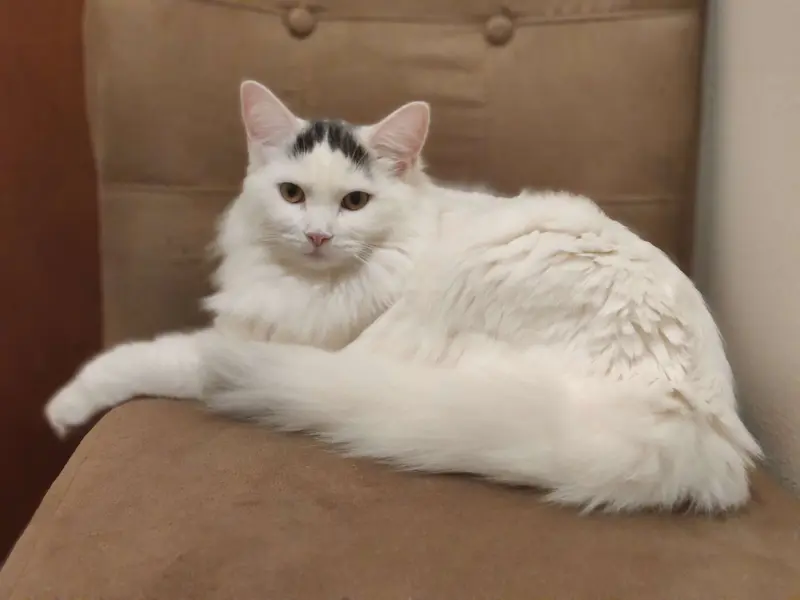
Turkish Van temperament
Loyal companions that always appreciate a game of fetch, Turkish Vans crave physical closeness even though they are not fond of being held or carried. They curl up beside you on the couch or crawl into your lap during TV.
CFA says they get along with dogs if properly introduced and do best with older children who accept their reluctance to be carried and will not pull their colorful tails.
Turkish Van personality
Very intelligent problem-solvers, Turkish Vans work out how to open the cupboard where the cat food lives. They like toys made of natural materials such as feathers or fur and devise their own from crumpled paper and more.
Well known for an affinity to water, Turkish Vans are said by some founding breeders to play and swim in pools or lakes voluntarily, even as kittens. Their voices are not loud but they are quite vocal and you will know one is nearby from the talking.
Turkish Van care
One of the easiest longhairs to groom, the Van has no undercoat to tangle. Run a steel comb through the coat occasionally to remove dead hair.
The warm-weather coat feels like a rabbit's fur and needs weekly combing and the heavier winter coat may need more. Extremely clean cats, Turkish Vans need no bathing unless shown.
Turkish Van health
CFA knows of no specific genetic problems in this healthy natural breed. Because Turkish Vans are large cats with a high activity level, they need plenty of space and regular exercise through interactive play or they could very easily become obese.
Turkish Van history
Turkish Vans are thought to have returned to Europe with the Crusaders, but the breed's modern history began in 1955, when two British photographers traveling in Turkey for the Turkish Tourist Board brought a pair of unrelated Turkish Vans back to England.
In 1983 Barbara and Jack Reark of Florida imported a breeding pair from France and later three more from the Netherlands. CFA credits them with promoting the breed in the United States. CFA first recognized the Van in 1988 and advanced it to championship in 1994.
More cat breed guides
Sources
Photos via Wikimedia Commons: Turkish Van by BabybirdOli, CC BY-SA 4.0
