Home / Cat breeds / Persian
Persian breed guide
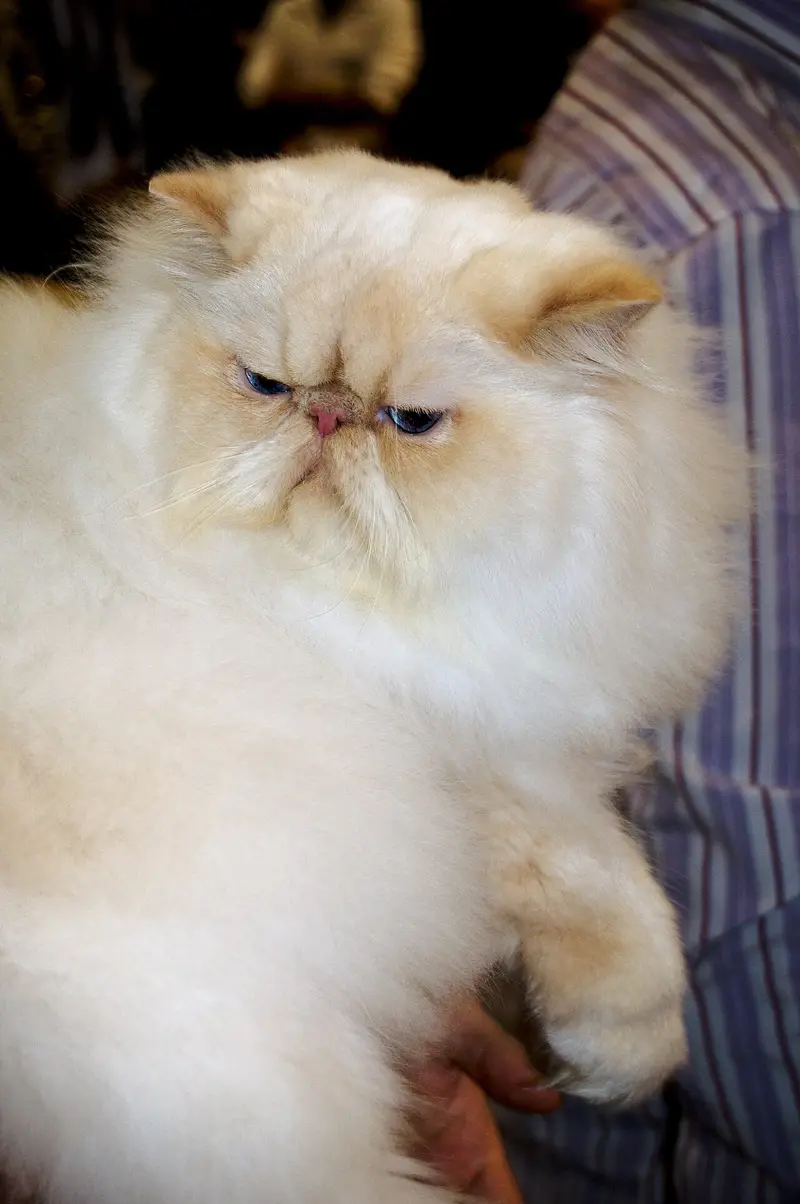
Cat Fanciers' Association (CFA) says the Persian's flowing coat has symbolized feline beauty for well over 100 years, but the structure beneath must be symmetrical, substantial, refined and above all round.
Eyes, head, muzzle, body and even ear tips all give the impression of a circle.
- Coat length
- Longhair
- Competition divisions
- Seven
Persian temperament
Calm and even-tempered, the Persian pairs that with enduring devotion to its people. CFA says this makes it compatible with children of all ages and lets it coexist peacefully with other pets.
A toy will get it to chase, but it is happier simply receiving attention and affection.
Persian personality
CFA describes a playful yet placid, easygoing and mellow cat that quickly learns the meaning of the word no. Grooming demands begin in kittenhood, which is why the breed trains so easily and many Persians also answer to their names.
Persian care
Owning a Persian calls for a serious commitment to regular grooming. CFA adds regular vacuuming. A steel or Teflon-coated comb with long, coarse and fine teeth is essential against mats and tangles.
Large eyes may stain and need cleaning with a soft, damp cloth. Baths come only after a thorough combing and nail clipping and many pet owners rely on professional groomers.
Persian health
An emphasis on refined features once produced cats with smaller-than-average nostrils and breathing problems and breeders responded by removing affected cats from breeding programs. Polycystic kidney disease shortened the lives of many Persians in the early 2000s and genetic testing with spaying or neutering of affected cats now keeps it well controlled.
Persian history
The Persian's name reflects its presumed country of origin and nobody knows exactly how it reached western Europe. In 1626 Italian trader Pietro della Valle came back from Persia with a heavily coated longhaired cat distinct from the Turkish Angora and the two breeds were combined to make a sturdy, short-nosed cat with a silky, dense coat.
The first US imports arrived in the late 1880s and the Persian was one of the six foundation breeds when CFA started in 1906. It has been among CFA's top ten breeds by registrations for as long as such rankings have existed.
More cat breed guides
Sources
Photos via Wikimedia Commons: Persian by Foglia8519, CC BY-SA 3.0
